find near you


 find near you
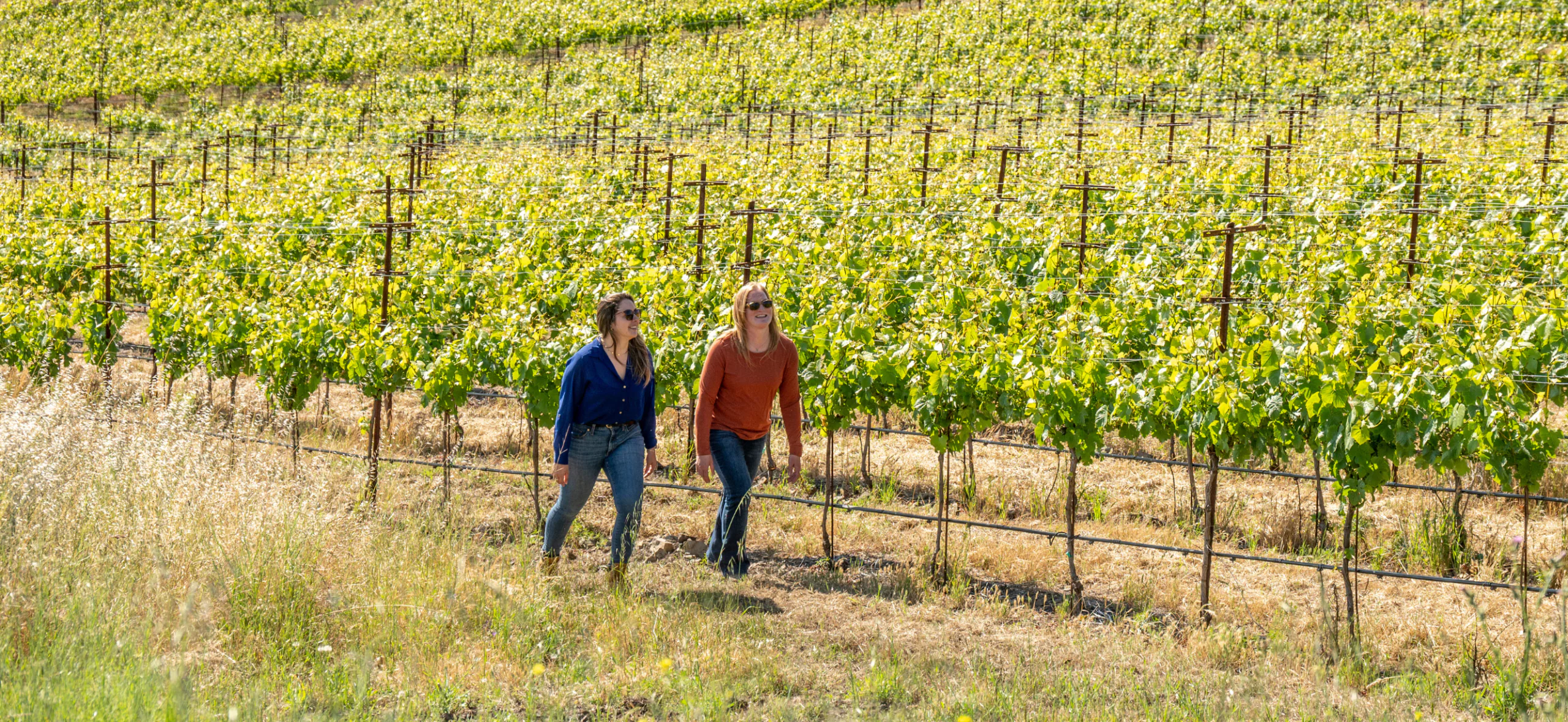
Some vineyard partnerships begin with a phone call. Others grow out of years of quietly admiring a site from a distance, tasting the wines it produces, and waiting for the right moment to reach out. For MacRostie Winemaker Heidi Bridenhagen, Olivet Lane Vineyard was always on her mind.
When Heidi and founder Steve MacRostie began building out the MacRostie Estate House and developing a portfolio of small-lot, single-vineyard wines from across the Sonoma Coast, Heidi knew which vineyards she wanted to pursue. Olivet Lane was at the top of the list.
“I had tasted world-class wines made from the property and always admired it,” Heidi says. So in 2014, she and Steve visited the vineyard, met the Pellegrini family, and began what has since become one of MacRostie’s most important and enduring partnerships. That first vintage produced both a Chardonnay and a Pinot Noir, and the collaboration has continued ever since.
A Family Rooted in Wine – and in Sonoma County
The Pellegrini family’s connection to wine stretches back more than a century. After emigrating from Tuscany in the early 1900s, the family became involved in nearly every part of the wine business – growing, producing, importing, and distributing. That breadth of experience gave them a deep understanding of wine not simply as a product, but as the result of agriculture, patience, and place.
Their Sonoma County story took a defining turn in 1972, when Vincent and Aida Pellegrini purchased a 70-acre apple and plum orchard on West Olivet Road in the Russian River Valley. The region had not yet earned the international reputation it enjoys today, but the Pellegrinis recognized that its cool climate and distinctive soils offered remarkable potential for wine grapes.
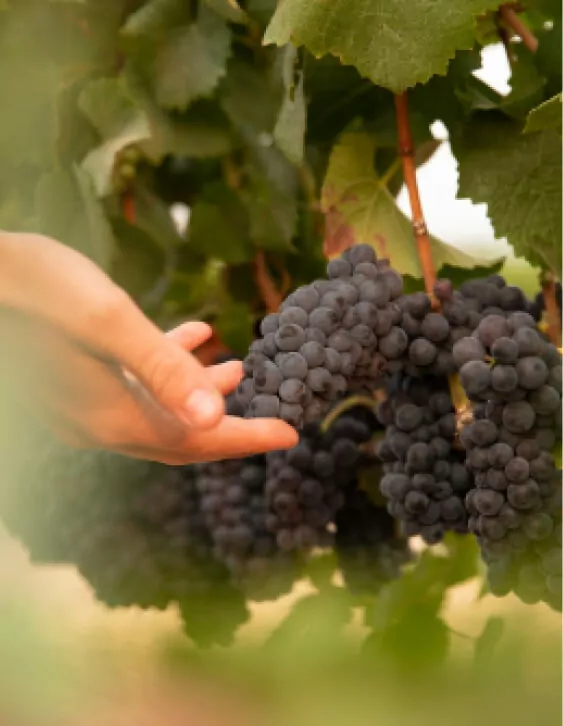
In 1975, they planted Chardonnay and Pinot Noir, making Olivet Lane one of the earliest vineyards in the Russian River Valley dedicated to these classic Burgundian varieties. Those original plantings – Old Wente Chardonnay and heirloom Martini clone Pinot Noir – remain prized today for their ability to produce nuanced, expressive wines that reflect the character of the site.
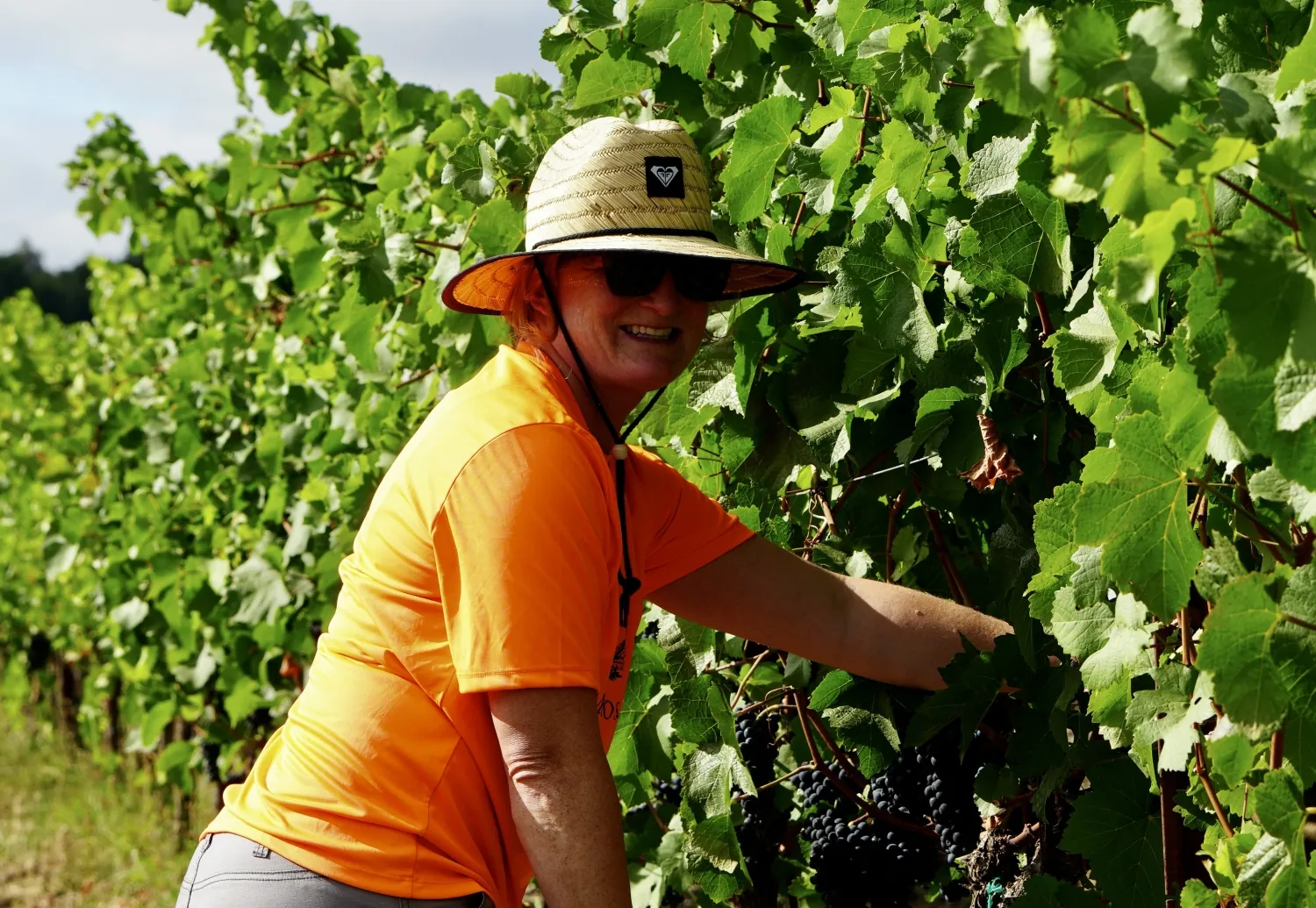
Today, Olivet Lane is farmed by the fourth generation of the Pellegrini family. Heidi works closely with fourth-generation winegrower Alexia Pellegrini, whose instincts as a grower come from a lifetime of watching these vines respond to each season.
“Her passion and intuition as a multigenerational grape grower are apparent,” Heidi says. “That kind of knowledge can’t be taught — it comes from years of walking the rows and paying attention.”
What Makes Olivet Lane Vineyard Special
Olivet Lane sits on the low-lying Laguna de Santa Rosa Plain, an area strongly shaped by Pacific Ocean influence. Morning fog rolls in and settles over the vineyard, then returns as temperatures fall each evening. This cooling pattern slows the ripening process significantly, extending the growing season and giving the grapes time to build flavor and complexity while holding onto their natural acidity.
The vineyard’s gravelly clay loam soils provide good drainage and encourage balanced vine growth, helping the fruit develop concentration without becoming heavy or overripe. The result is a distinctive combination of ripeness and restraint that is difficult to replicate elsewhere.
For Heidi, Olivet Lane embodies everything she looks for in a vineyard partner. “The best vineyards don’t hit you over the head,” she says. “They have a quiet character that reveals itself over time.” Olivet Lane has that quality in abundance.
The Wines: Chardonnay and Pinot Noir from a Russian River Valley Benchmark
MacRostie produces both a Chardonnay and a Pinot Noir from Olivet Lane, and each reflects the vineyard’s cool-climate character in its own way.
The Chardonnay is focused and precise, built around the vineyard’s naturally vibrant acidity. The extended growing season allows the fruit to develop gradually, producing layers of citrus, orchard fruit, and subtle mineral complexity alongside a freshness that keeps the wine lively from first sip to finish. Heidi’s winemaking approach is intentionally restrained – the goal is to frame the fruit, not to shape it.
The Pinot Noir captures a different dimension of the site: its ability to produce red wines with elegance, structure, and genuine depth. The old Martini clone vines contribute a layered, expressive character that reflects both the vintage and the particular qualities of this piece of ground.
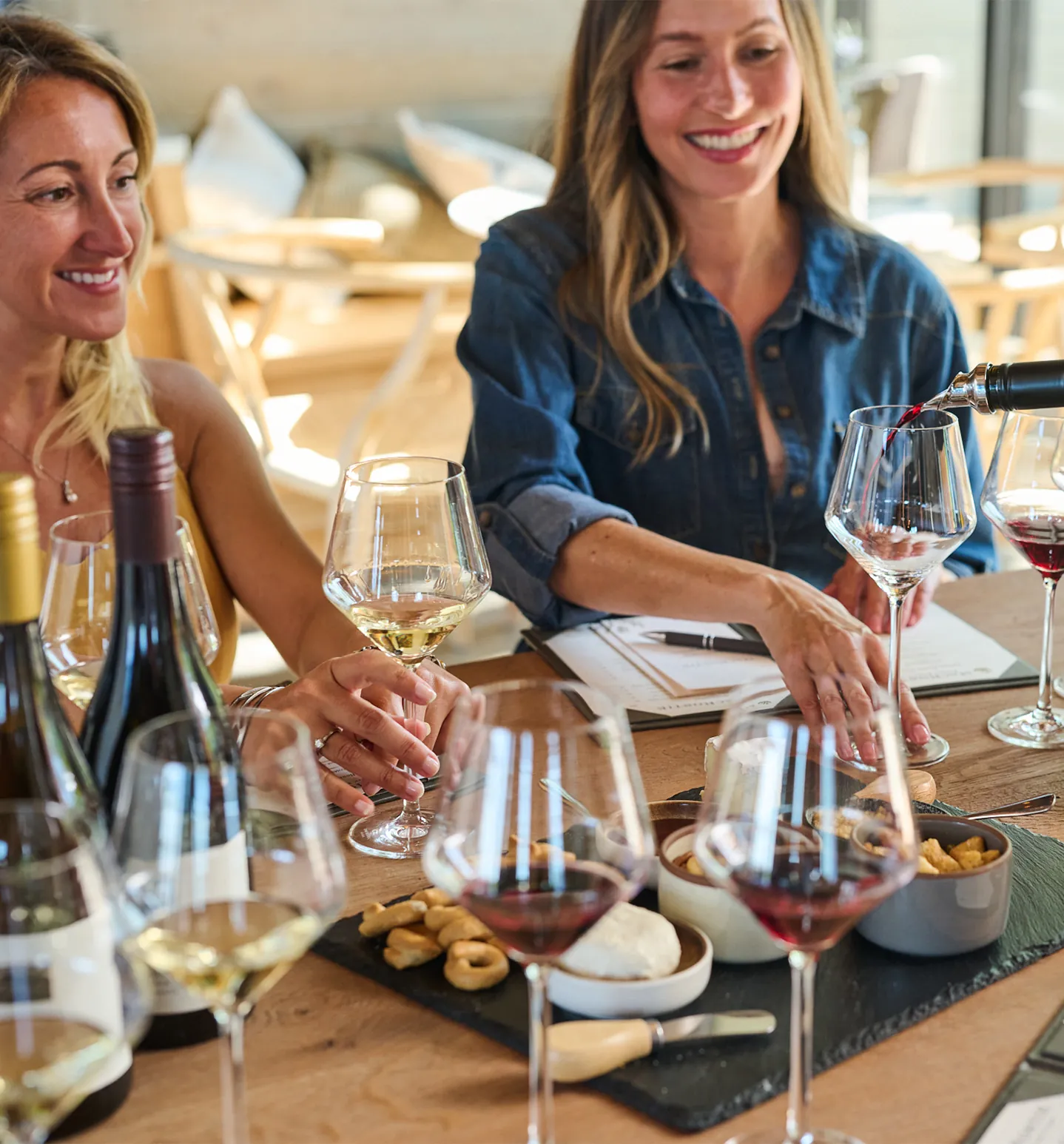
Both wines are made in small quantities and are available exclusively through the MacRostie wine club and Estate House. They represent some of the most direct expressions of Russian River Valley terroir in the MacRostie portfolio.
Why Vineyard Partnerships Matter
A vineyard-designated wine is made from grapes grown at a single named site rather than blended across multiple properties. For wine lovers, this offers a unique opportunity to taste how one specific place – its climate, soils, vine age, and farming – translates into the glass.
For Heidi, these partnerships are also about trust. Working with the same vineyard team over many years means learning how each site behaves across different seasons and being able to respond to what the fruit is telling you, rather than working from a formula.
At Olivet Lane, that trust has been built over more than a decade. The Pellegrini family brings generations of winegrowing knowledge and an intimate understanding of their land. Heidi brings a winemaking philosophy built around listening to the vineyard and staying out of its way.
The wines that result are the best argument for why partnerships like this matter.
A Philosophy Built on Place
At MacRostie, every vineyard partnership begins the same way – with a genuine belief that the site has something exceptional to say, and a commitment to listening carefully enough to let it. Olivet Lane and the Pellegrini family represent exactly that: a meeting of shared values, mutual respect, and a deep love for what Sonoma County’s cool-climate vineyards can produce. To experience the wines and the stories behind them, visit us at the MacRostie Estate House in Healdsburg.