find near you


 find near you
What Makes California Pinot Noir Special?
Pinot Noir is one of those wines that tastes remarkably different depending on where it’s grown. In California, abundant sunshine meets cool coastal fog, diverse soils and an extraordinary range of vineyard sites — producing Pinot Noirs that are expressive and fruit-driven, yet still fresh, structured and full of a distinct sense of place.
So what makes California Pinot Noir special?
In short: it gets something most Pinot Noir doesn’t – plenty of sunshine and the fog, wind and cool nights of a true cool climate. Below, we’ll unpack why that combination matters so much.
A Short History of Pinot Noir in California
Pinot Noir has been grown in California since the 1850s, with early plantings in Sonoma County, Carneros and Napa Valley. Over time, growers moved the grape toward cooler regions – Sonoma County, Anderson Valley and the Central Coast – where it could ripen slowly across a longer growing season. At MacRostie, our own Pinot Noir story began in the cool-climate Sonoma Coast and Russian River Valley, regions that would go on to earn international recognition.
Want the fuller story, including Pinot Noir’s roots in Burgundy? Read our History of Pinot Noir.
Why Is California Pinot Noir Different From Other Regions?
Geography is the starting point. California is known for sunshine, but some of its greatest Pinot Noir vineyards sit in remarkably cool places. Along the coast, the Pacific Ocean acts like a natural air conditioner – marine breezes and fog moderate daytime heat, while cool nights slow ripening.
That matters enormously for Pinot Noir. In conditions that are too warm, the grape ripens quickly and can lose the acidity and nuance that make it so compelling. In a cool site, fruit stays on the vine longer, developing flavor gradually while holding onto freshness.
This combination – California sunshine paired with genuine cool-climate growing conditions – is what sets the state’s best Pinot Noir apart. The result is often a rare middle ground: generous fruit and aromatic intensity alongside bright acidity, silky texture and real complexity.
Compared with other major Pinot Noir regions:
- Burgundy, Pinot Noir’s historic home, is often prized for earthiness, delicacy, structure and a very precise expression of individual vineyard sites.
- Oregon is known for cooler-climate expressions that lean toward bright red fruit, acidity and savory or earthy character.
- California has traditionally been associated with riper fruit and more generosity – but that reputation misses much of what’s happening in the state’s best cool-climate vineyards.
In places like the Sonoma Coast and Russian River Valley, Pinot Noir combines vibrant fruit with freshness, fine tannins, spice, earth and real natural acidity. The best examples aren’t simply a product of California sunshine – they reflect the tension between sun and fog, warmth and coolness, ripeness and acidity. That tension is a large part of what makes them so interesting to drink.
Why Is Sonoma So Good for Pinot Noir?
Sonoma County packs an extraordinary range of microclimates, elevations and soil types into one region, several of them ideally suited to Pinot Noir. The expansive Sonoma Coast encompasses celebrated appellations like the Russian River Valley and Petaluma Gap, each with its own take on the cool-climate formula described above – which means Sonoma Pinot Noir is never just one thing. A windswept, high-elevation vineyard near the coast can produce a wine with a completely different personality than one grown on the rolling hills of the Russian River Valley just a few miles away.
At MacRostie, exploring those differences is central to how we work. Our vineyard program spans more than 15 Pinot Noir sites, giving our winemaking team the chance to work with fruit grown across an exceptional range of cool-climate Sonoma terroirs.
What Makes Russian River Valley Pinot Noir Special?
The Russian River Valley is where Sonoma’s sun-and-fog balance shows up in especially vivid form. Pacific fog rolls in and keeps mornings — and part of the afternoon — cool, while wide swings between daytime and nighttime temperatures slow ripening even further. The region is also known for well-drained Goldridge soil, a sandy loam closely associated with many of its celebrated vineyards.
MacRostie Winemaker Heidi Bridenhagen often finds dark-fruit aromas, spiced black tea character, a generous mid-palate and soft-but-substantial tannins in Russian River Valley Pinot Noir, along with the natural acidity that gives the wines freshness and lift. In short: expect expressive fruit, texture, spice and freshness – not fruit alone.
What Does California Pinot Noir Taste Like?
As mentioned above, it depends heavily on where the grapes are grown. Broadly, a California Pinot Noir flavor profile draws from:
- Cherry, wild strawberry, raspberry and cranberry
- Dark cherry, blackberry or other darker fruit in warmer sites
- Rose petal or violet
- Black tea and baking spice
- Earth, forest floor and mushroom
- Subtle herbal or savory notes
- Silky tannins and refreshing acidity
Cooler sites tend to emphasize freshness, aromatics and tension; warmer sites lean toward riper, more generous fruit. Vintage matters too – Pinot Noir responds dramatically to each growing season, which is why tasting different vintages and vineyards side by side is so rewarding. Instead of asking what California Pinot Noir should taste like, it’s more useful to ask: what does this particular vineyard taste like, through the lens of Pinot Noir?
Does Sustainability Matter for Pinot Noir?
For us, yes. Pinot Noir is a sensitive grape, and thoughtful farming helps vineyards stay balanced and resilient. At MacRostie, sustainability goes beyond reducing inputs – our vineyard practices include diverse cover crops, composting, biochar, reduced soil disturbance, beneficial insect habitat, nesting boxes and rotational sheep grazing.
That doesn’t automatically make a wine taste better – sustainability alone isn’t a guarantee of quality. But healthy, balanced vines give winemakers a clearer reflection of the site to work with. For us, sustainably-made Pinot Noir starts with farming for the future, not just a single vintage.
Quick Answers: California Pinot Noir FAQ
What makes California Pinot Noir different from French Pinot Noir? California Pinot Noir tends toward riper, more generous fruit than Burgundy, though cool-climate regions like the Sonoma Coast and Russian River Valley narrow that gap with bright acidity and earthy complexity.
What is the best region in California for Pinot Noir? There isn’t one single “best” region – the Sonoma Coast, Russian River Valley, Anderson Valley and parts of the Central Coast are all recognized for cool-climate Pinot Noir, each with its own character.
What does California Pinot Noir taste like? Commonly cherry, raspberry and strawberry fruit with floral, spice, tea and earthy notes – though flavor varies widely by vineyard, climate and winemaking style.
MacRostie’s Approach to California Pinot Noir
Pinot Noir has been part of the MacRostie story since Founder Steve MacRostie made his first Chardonnay and Pinot Noir in 1974, in the region that would later become known as the Sonoma Coast. Today, Winemaker Heidi Bridenhagen continues that exploration through an extensive network of Sonoma vineyard partners alongside MacRostie’s own estate vineyards.
Rather than forcing every Pinot Noir into one style, Heidi lets each vineyard and block guide the winemaking. MacRostie runs more than 130 small fermentations in a typical vintage, with Pinot Noir fermented in small one-ton lots to preserve each vineyard’s individuality. Techniques like whole-cluster fermentation, extraction, cold-soaking and barrel aging are adjusted to fit the character of the fruit. The goal isn’t to make California Pinot Noir taste like “California” – it’s to capture the personality of the vineyard while keeping the balance and structure that define the MacRostie style.
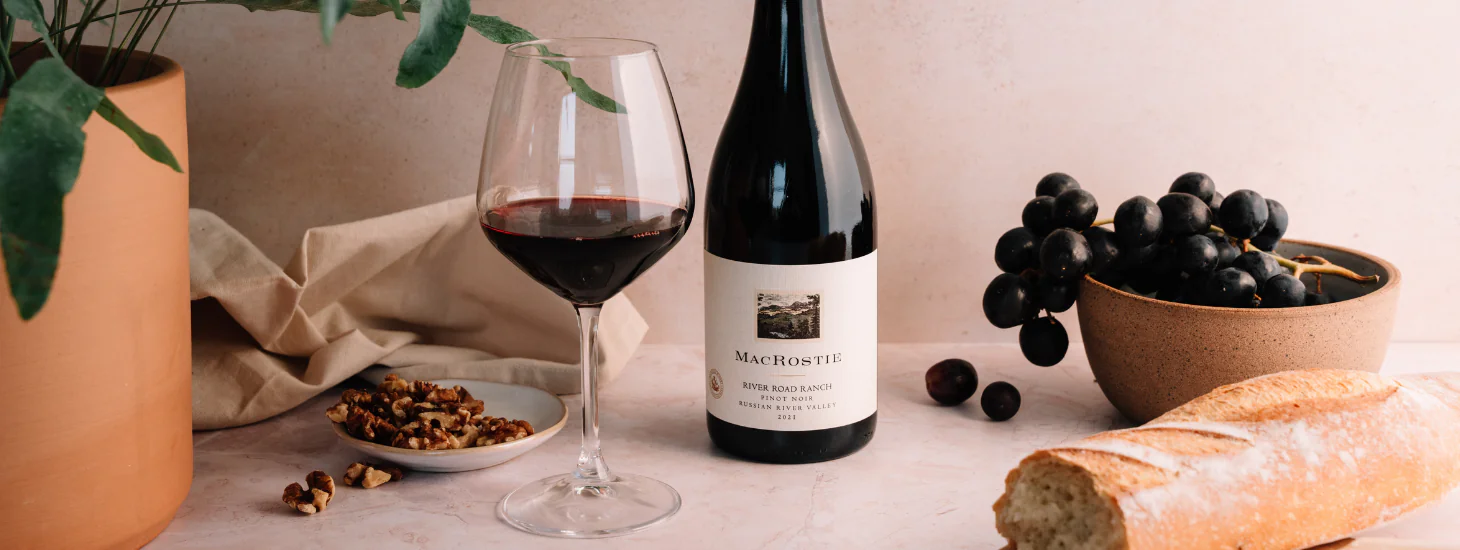
For a great introduction, try our Russian River Valley Pinot Noir, which showcases the depth, energy and expressive fruit of this renowned appellation. To go further, explore our Thale’s Vineyard Pinot Noir, grown at the MacRostie Estate House on Westside Road in the heart of the Russian River Valley – a 14-acre estate vineyard and cornerstone of our Pinot Noir program, offering a more site-specific expression of the region.
Explore our full collection of MacRostie Pinot Noir and taste how California’s cool-climate vineyards give one remarkable grape many different voices. That, ultimately, is what makes California Pinot Noir special.