
 find near you


 find near you
At Bacigalupi Vineyards, Nicole Bacigalupi Dericco and her twin sister, Katey Bacigalupi Row, share duties as the general manager for their family’s vineyard company and winery. Nicole is quick to laugh at her title. “As a family-run business, we wear a lot of hats. Basically, we do anything that needs doing.” Nicole and Katey are the third generation of their family to guide the business that their grandparents, Helen and Charles Bacigalupi, founded back in the 1950s—decades ahead of the grape planting boom that reshaped California wine country. There’s a fourth generation in the wings. Nicole and Katey each have two young children, all of whom are 10 or younger. “We probably can’t count them as the fourth generation to work here yet, but they help out at events, bussing tables, or doing odd jobs. We’re trying to plant the seeds for their future involvement.”
When asked why so many of the great vineyard companies are multigenerational, Nicole considers the question. “Farming isn’t a 9 to 5 job. It’s a way of life. My dad, John, who guides our farming, has pretty much worked every day for the past 45 years. Working the land is his obligation and his passion. The vineyards rely on us to be present.”
The seed that would grow to become Bacigalupi Vineyards was first planted in 1956, when Charles Bacigalupi, who was a dentist, and his wife Helen, a pharmacist, followed their love of the land and acquired the 121 acres that would become the Bacigalupi family’s Goddard Ranch on Westside Road. On the advice of Pam’s father, who believed that premium winegrapes were the future of the Russian River Valley, Charles began planting Chardonnay and Pinot Noir. This included using Pinot Noir budwood from Karl Wente—the first well-documented plantings of Pinot Noir in the Russian River Valley. Charles and his son, John, worked alongside each other, perfecting their viticulture techniques and expanding the vineyards with the addition of Bloom Ranch in 1973.
In 1976, the Bacigalupi’s caught lightening in a bottle, when Château Montelena’s 1973 Chardonnay—a wine that included Bacigalupi fruit—won the famous Judgment of Paris Tasting against a who’s who of the world’s best Chardonnays. “Back then, the California wine industry was in its infancy,” says Nicole. “That win let us know that we were on the right path. It also elevated perceptions of the Russian River Valley. But as farmers, we don’t believe in resting on our laurels. There is always another vintage that needs our attention.”
In the years that followed, the Bacigalupis honed their skill as grape growers, with John taking on the role of vineyard manager, and in the early 1980s, the family partnered with Belvedere Winery to release some of California’s first vineyard-designate Chardonnays and Pinot Noirs. This included a 1983 vintage that was served at the White House for President Ronald Reagan. In 1993, the Bacigalupis added a third property, the now-renowned Frost Ranch, to their vineyard holdings, and in 2011, the family founded their own winery and opened their Tasting Room, neighboring MacRostie on Westside Road.
MacRostie’s history with the Bacigalupi family goes back decades to Steve MacRostie’s early relationship with Nicole and Katey’s parents, John and Pam. Over the past decade, this relationship has only deepened, as our winemaker, Heidi Bridenhagen, has sourced grapes from a coveted block (Block 12A) of Frost Ranch to craft our Bacigalupi Vineyard Chardonnay. Fruit from Frost Ranch often also plays a key role in our pinnacle Chardonnay bottling, The Key. “Frost Ranch is a fantastic vineyard,” says Heidi. “It’s in a warmer part of the Russian River Valley and features a combo of plantings of old 1970s heritage clones. It also has a very unique trellising system that’s a hybrid of vertical shoot positioning (VSP) and old-school sprawl, which provides this ideal dappled sunlight to the grapes. We often pick it at lower Brix, and it produces an exquisite standalone Chardonnay, with gorgeous floral notes, amazing acidity, and lovely citrus and tropical flavors.”
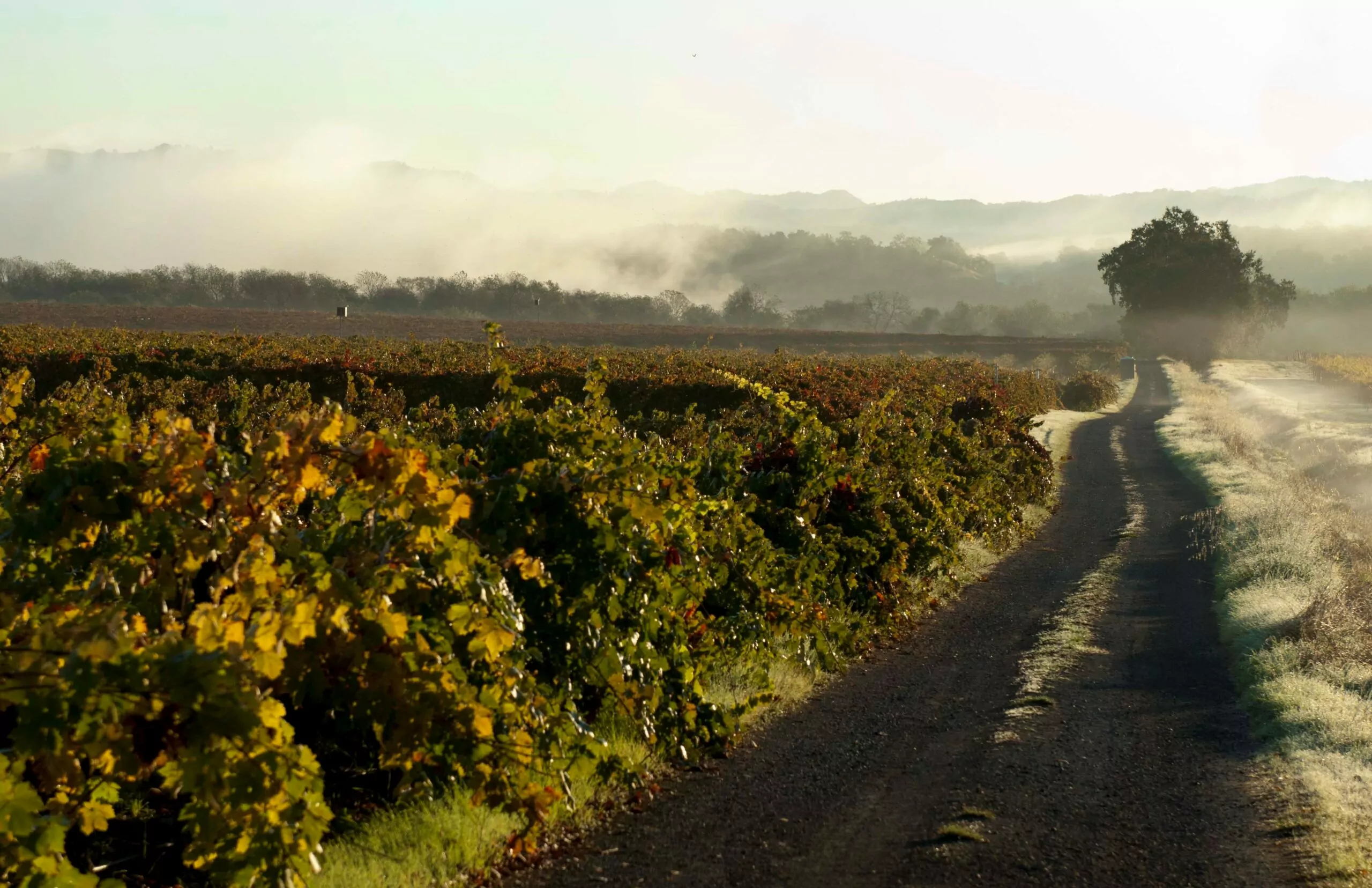
In any given vintage, the Bacigalupi family works with approximately 15 to 20 wineries, but only a few—like MacRostie—are allowed to make vineyard-designate wines using the Bacigalupi name. “When it comes to putting our name on a bottle, we are looking for wineries that share our values and our commitment to quality,” says Nicole. “We are not looking just to sell fruit. We are looking for mutually beneficial relationships. When I see my family’s name on a bottle, I want to be proud. Heidi is a fantastic winemaker and a joy to work with. Despite being so accomplished, she has this very humble, respectful approach that is really refreshing. She gets it!”
As a reflection of how closely aligned MacRostie is with the Bacigalupis, the two wineries share the fruit from Block 12A. In fact, Block 12A is the same section of the vineyard that the family used to make their winery’s debut Bacigalupi Vineyard Chardonnay. “We are neighbors in Block 12A,” adds Nicole, “and our tasting rooms are right around the corner from each other. When we talk about our roots in the Russian River Valley and our love of this region, that’s something that Heidi and the MacRostie team understand.”
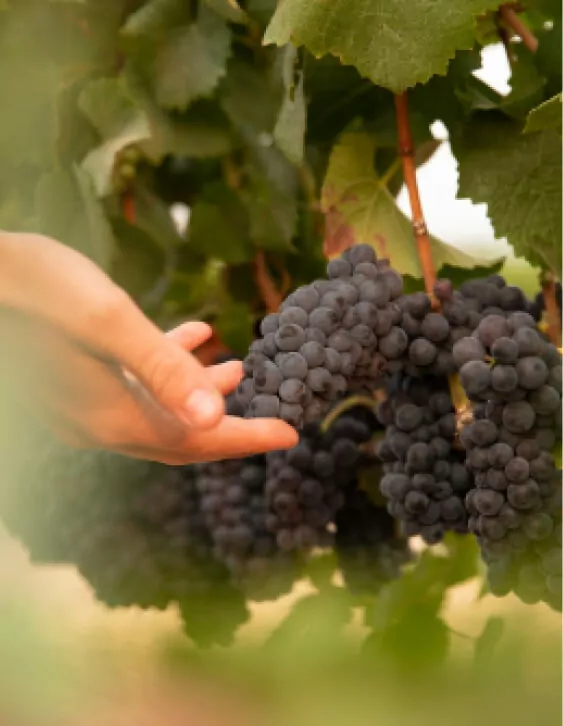
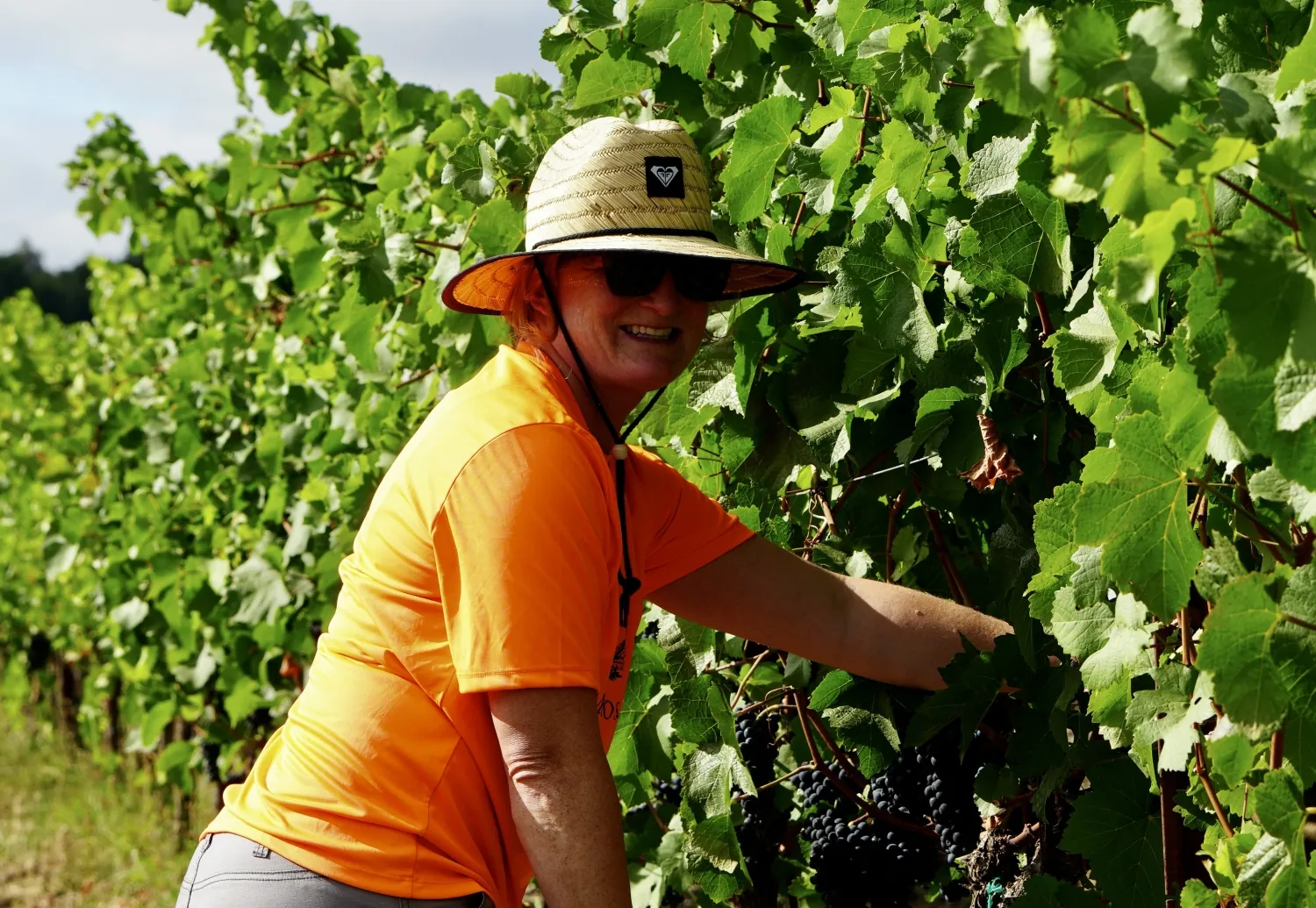

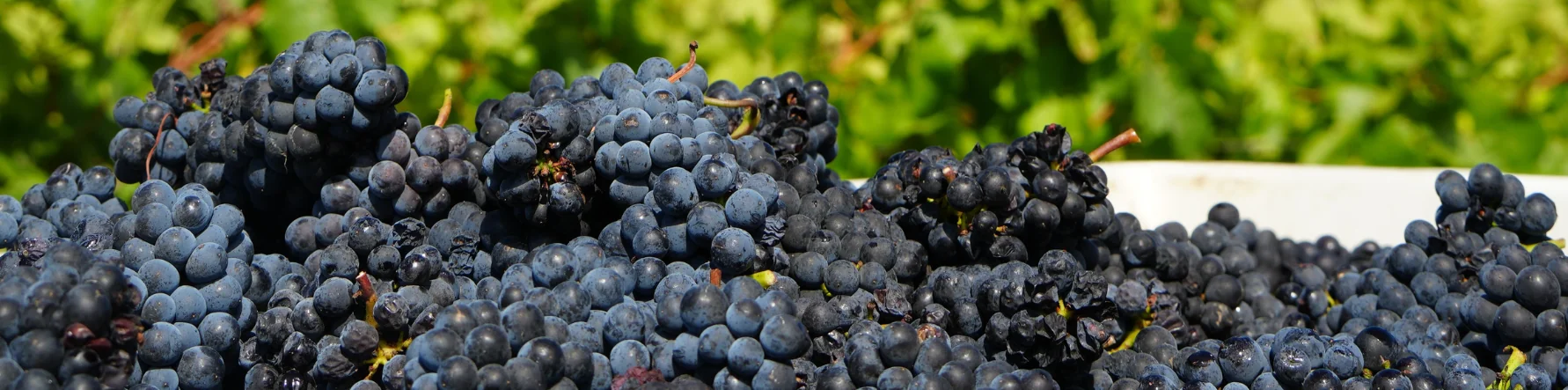
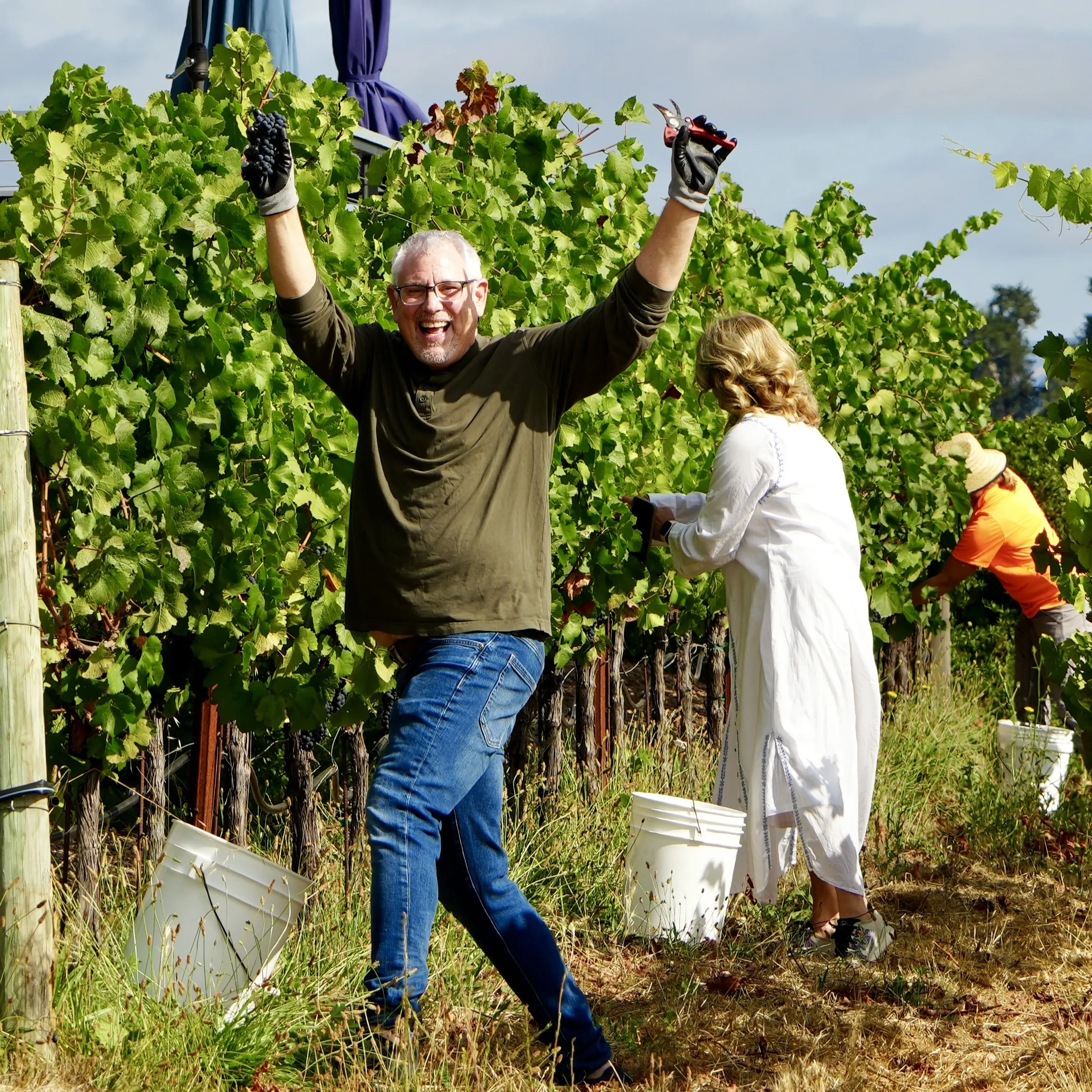 By early August, we were tracking two to four weeks behind schedule. Warm weather over Labor Day weekend helped ripening accelerate, followed by a gentle cool-down that set the stage for an ideal harvest. Our first Pinot Noir pick came from Thale’s Vineyard on September 5th, and our last Pinot came from Dutton family’s Manzana Vineyard on October 6th. For Chardonnay, we started with Bacigalupi Vineyard on September 16th and finished with our Nightwing Estate and Dutton Jewell Ranch on October 10th.
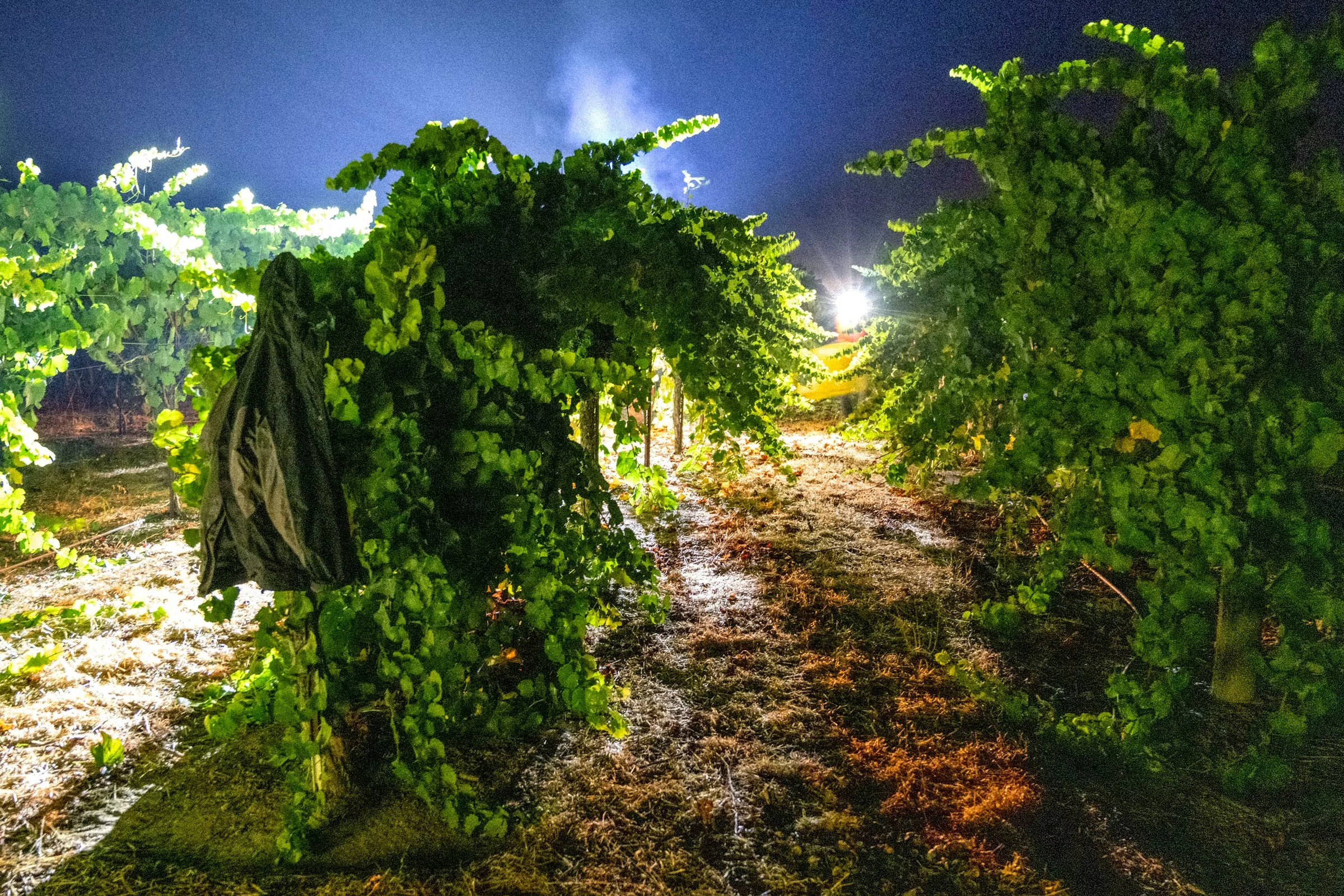
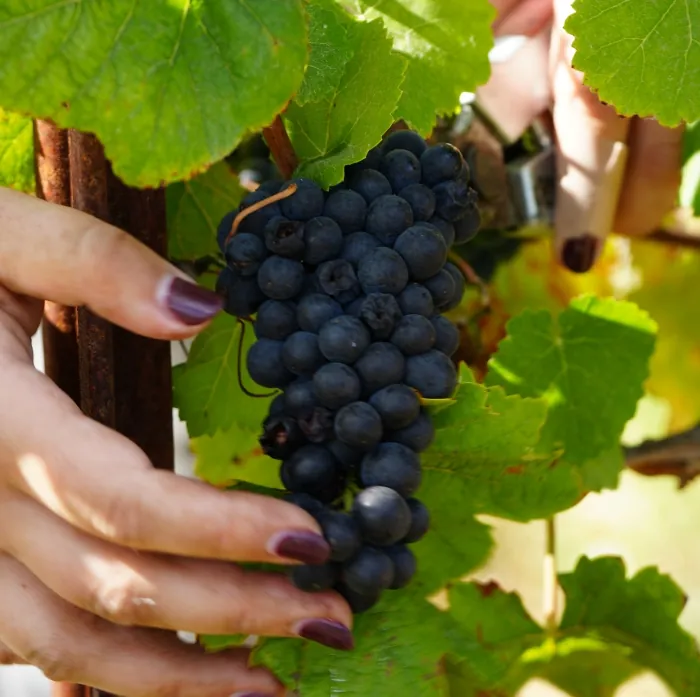 At Nightwing Vineyard, years of close observation are paying off. We’ve learned how each clone and block behaves and have fine-tuned our approach to pruning, canopy management, and harvest timing accordingly for each. As a result, the consistency and quality from Nightwing continue to impress. At Thale’s Vineyard, we’ve advanced our canopy coverage experiments to adapt to its warmer location. By using shade cloth, nutrient adjustments, and even natural clay applications (a kind of sunscreen for grapes), we’re protecting fruit freshness during heat events — an exciting evolution in our farming approach.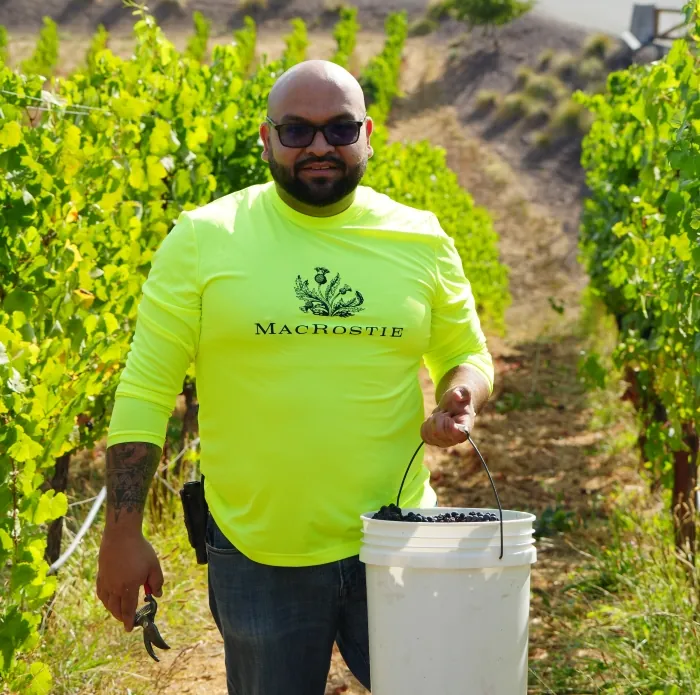
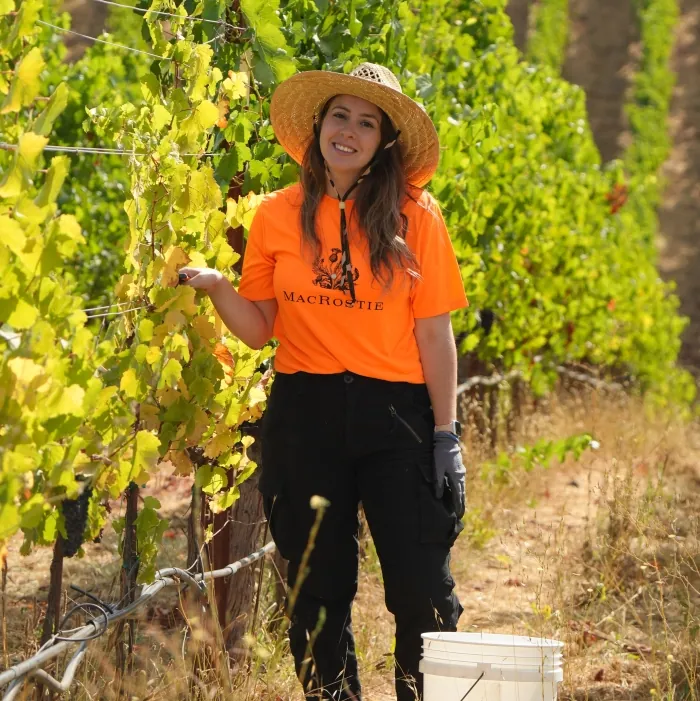 One of my favorite parts of this harvest was the energy in the cellar. Our Cellar Master, Francisco “Paco,” completed his second vintage with us, and our Assistant Winemaker, Carolina, her fifth, with both bringing incredible skill and enthusiasm to their work. We also had two returning interns, which is uncommon. Collectively, the whole team worked together seamlessly, sharing knowledge, running small-lot trials, and keeping things fun along the way. We even did a team pick of one block of our Thale’s Vineyard, and celebrated together afterwards with a toast of sparkling wine to another great year.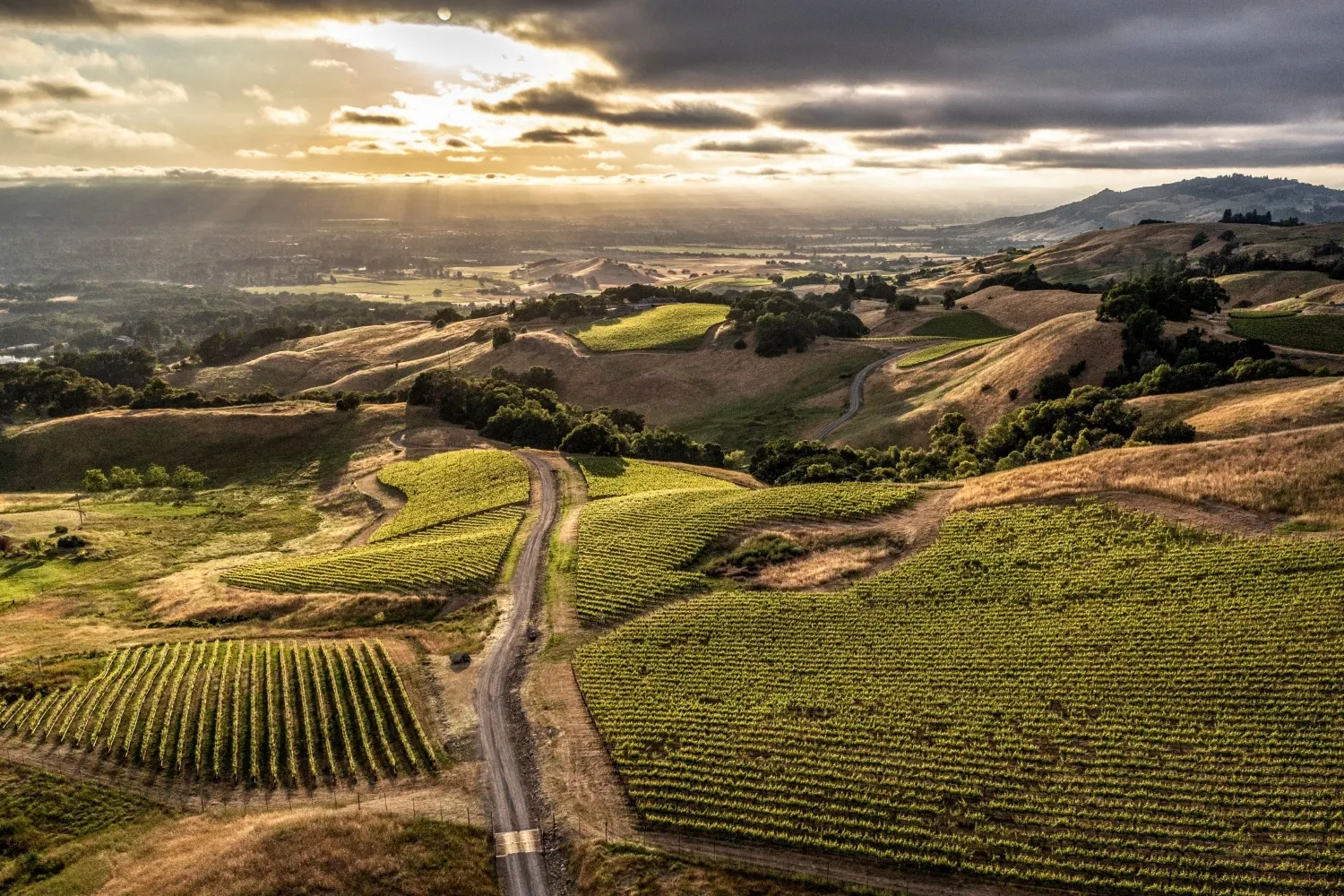
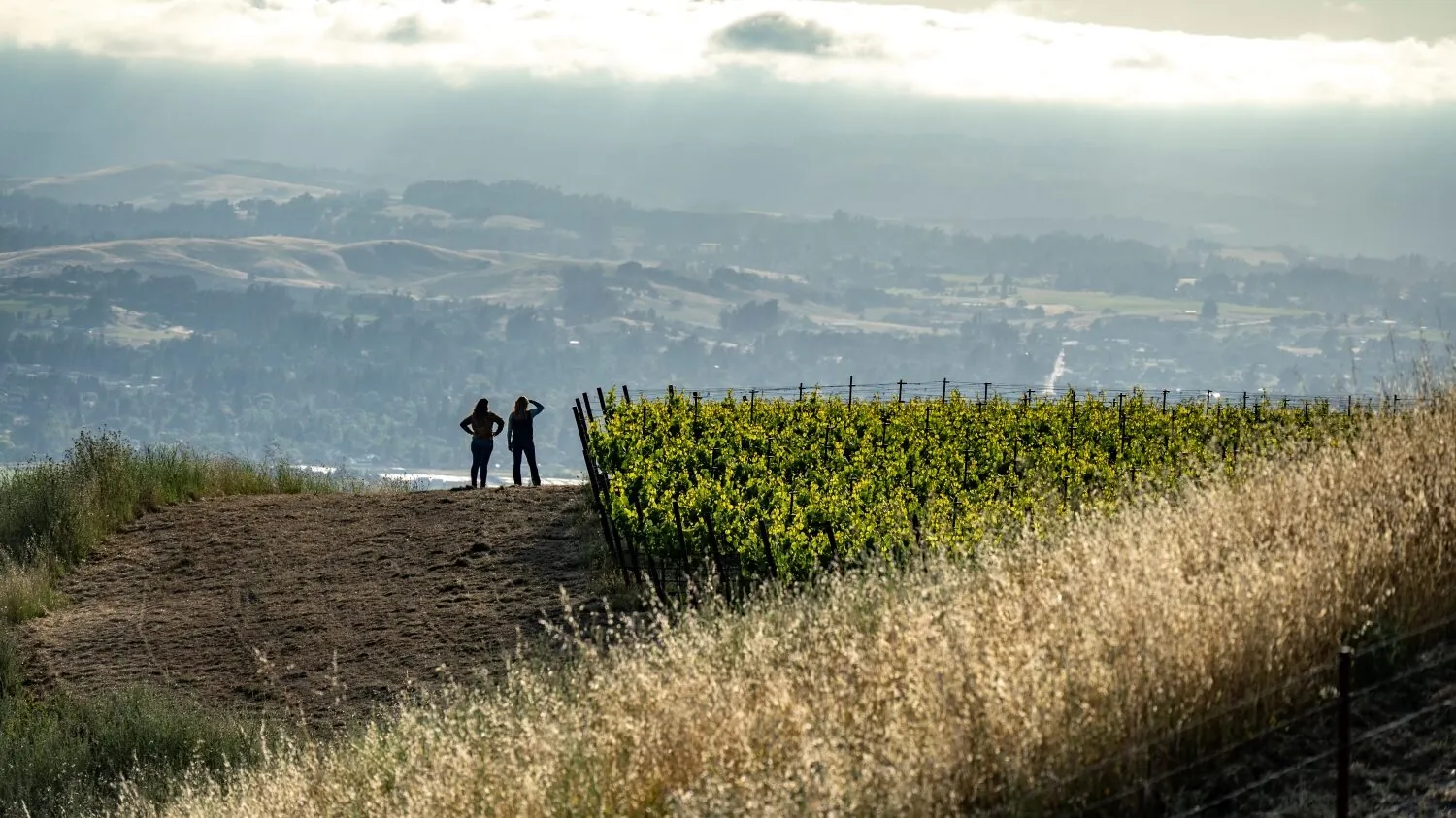

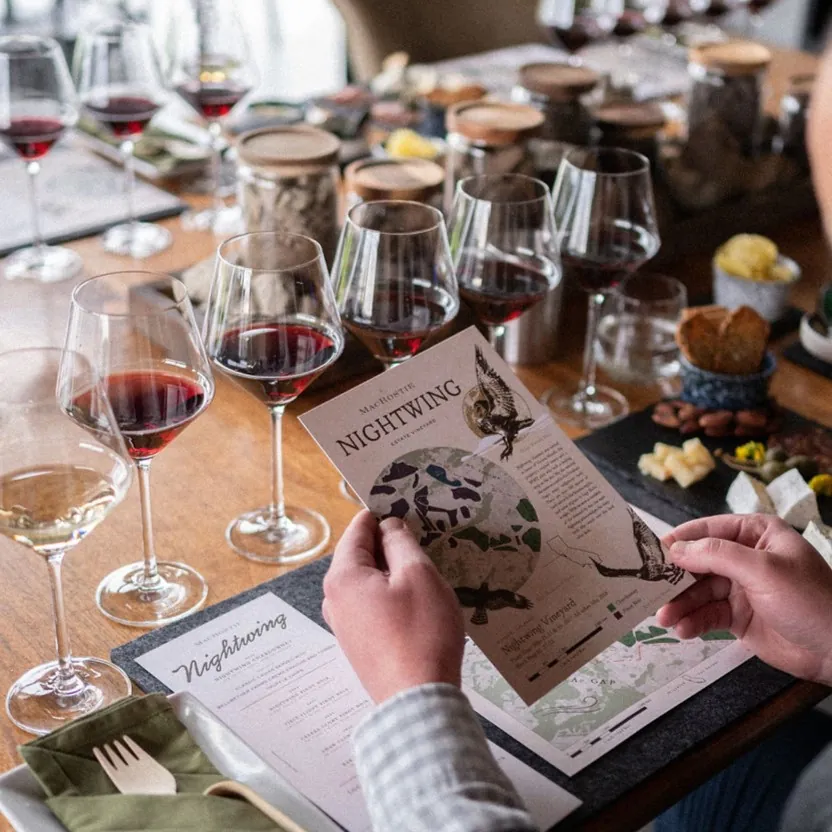 Since we only occasionally host events at Nightwing, we unveiled a special experience last year to spotlight the vineyard and to help our customers forge a deeper connection with this exciting site and its wines. Focused exclusively on 90+ point wines from Nightwing, our 2-hour